Weird and Wonderful Festive Food Traditions From Around The World
Christmas wouldn’t be Christmas without delicious food. Your holiday gammon with pomegranate and pink peppercorn sauce, and your delectable trifle to finish it off. For a sizable chunk of Southern Africa, it’s a dream come true. However, what we would regard as a joyful pleasure may not be to others. Some holiday dishes that are more well-known in other nations than our own may seem a little too “out there” for our tastes.
Many of the foods consumed around the world during the Christmas season have a long history that has been passed down through the centuries, while others are comparatively new concepts. Many of the foods we eat throughout the holiday season were previously necessities rather than treats, from Christmas pudding in England to Mopane caterpillars in South Africa. However, many of these classic Christmas meals have evolved into something of a delicacy for many people.
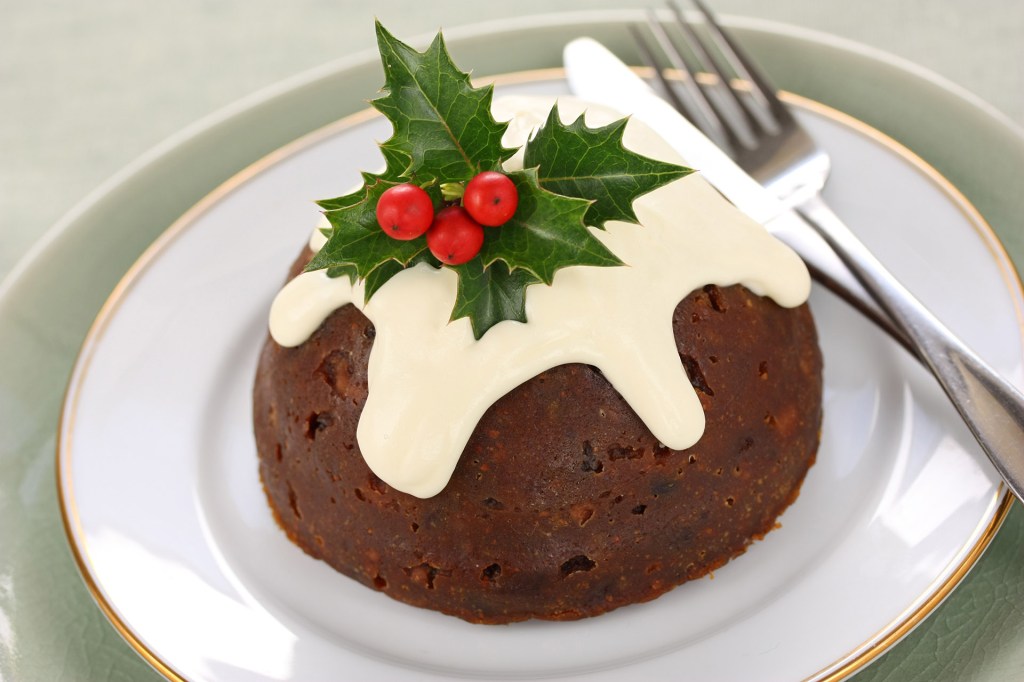
England- Christmas Pudding
Christmas pudding’s history dates back to the 14th century in England, where it first appeared as “frumenty,” a porridge-like dish stuffed with fruits, oats, nuts, and suet. In keeping with custom, it was prepared roughly five weeks before Christmas as a meal to break a fast and prepare for Advent. Additionally, alcohol would be added to the hearty meal before being steamed or boiled. All family members were encouraged to stir the concoction while wishing good luck as they went.
Japan- KFC Christmas Dinner
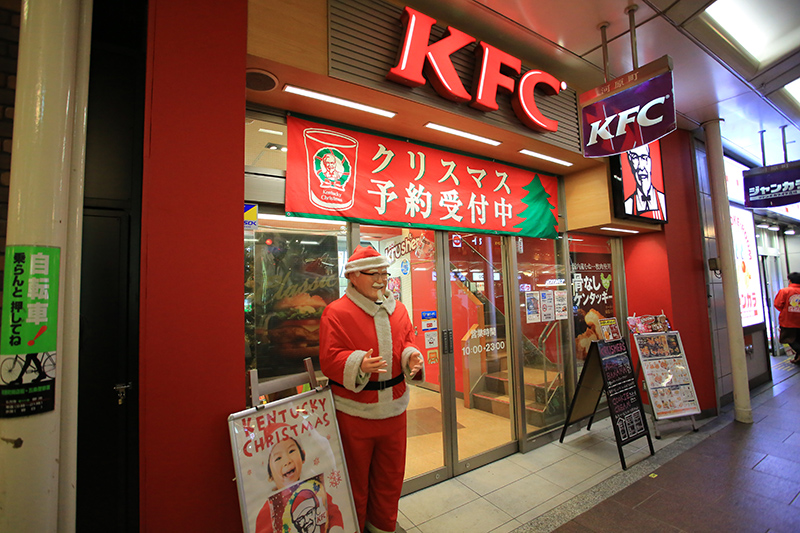
There aren’t many Christmas traditions in Japan. However, it does include Christmas fried chicken. By most accounts a relatively new custom, it gained popularity when KFC in Japan started to advertise fried chicken as a Christmas lunch in the 1970s.
In modern times, the Japanese have to start planning their KFC Christmas feast months in advance. Pre-booking is necessary if you don’t want to spend hours in line since an estimated 3.6 million families are expected to participate each year.
China- Christmas Eve Apples
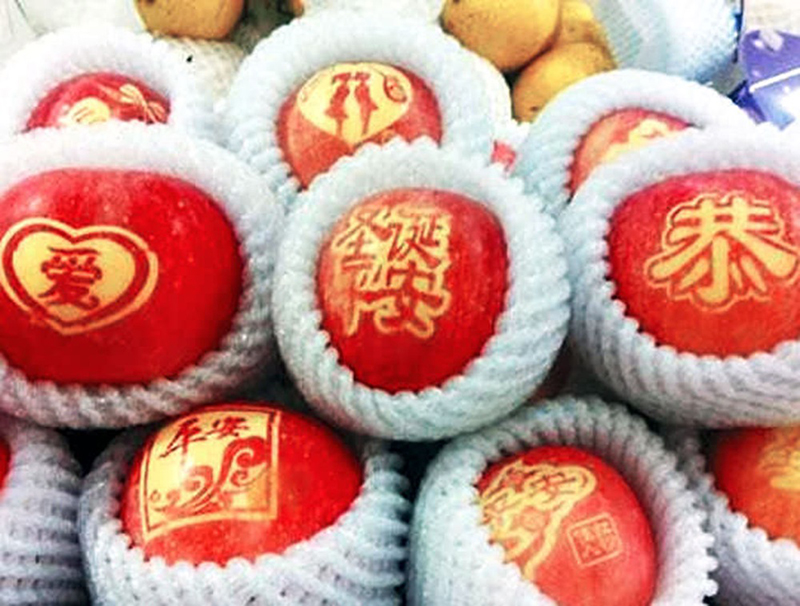
Apples aren’t particularly rare, am I right? However, in China, what they do with them is what matters. Despite having almost no cultural ties to the holiday, China doesn’t observe Christmas as a public holiday. Christmas celebrations are however growing in popularity, particularly with younger Chinese generations. Sharing ornamental apples with your loved ones on Christmas Eve is a custom that has recently become popular.
The apples are prepared for gift-giving by being carved with an uplifting phrase and wrapped in cheerful paper. They are referred to as “peace apples,” and they are a method to express how much you care about someone’s health and well-being.
Russia-Selyodka Pod Shuboy
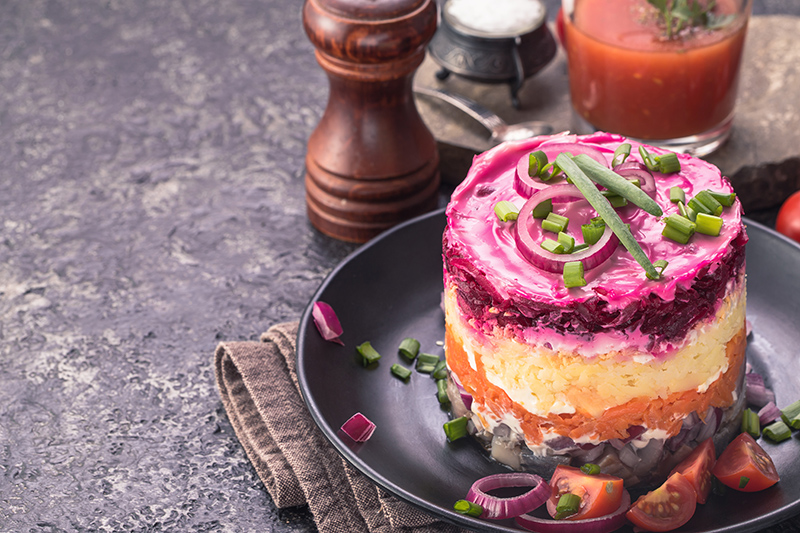
One of our list foods with the most ostentatious appearances is Selyodka Pod Shuboy, a Russian delicacy. Its name, “Herring beneath a fur coat.” It’s composed of diced pickled herring stacked under diced potato, carrots, beets, onions, and mayonnaise, then topped with cooked eggs. The dish is typically served as party food and is a necessity at many Russian festivals, especially around Christmas. It is frequently fashioned into intricate designs.
South Africa- Mopane Worms

Christmas Day meals vary around the world, but it doesn’t get more unusual than in our country. While not exactly considered a Christmas dish, Mopane worms, which are high in protein and are the larva of the Gonimbrasia Belina moth, are in great supply during the holiday season in South Africa. Their name comes from the Mopane tree, which grows well in the dry regions of Namibia, Botswana, and South Africa and offers the ideal environment for the worms to thrive.
They will be a perfect Christmas treat, especially for the older generations, as the harvest will start in late November. While fresh worms are typically cooked with onions, tomatoes, and chilli after being harvested, some worms are kept for the remainder of the year. They’re not something that’s consumed to the same extent these days and many view them as a type of bushmeat because this habit was born out of need, but some cultures regard them as a delicacy.
By making these traditional dishes on our holidays at home or while going abroad over vacations, one gets to see the customs of other cultures and join an exchange attempt with them.
